Written by: ReproductiveHealthExperts Reproductive Endocrinology Research Desk (Obstetric & Gynecological Clinical Desk)
Fact-Checked & Reviewed by: ReproductiveHealthExperts Clinical Reproductive Advisory Board (Reproductive Endocrinology & Pharmacology Panel)
Standards: Current Clinical Edition | Peer-Reviewed & Verified | Zero Commercial Conflicts | Direct clinical extraction from official FDA Full Prescribing Information & ACOG Practice Bulletins
Guidelines: Adheres to ACOG Practice Bulletins and FDA Section 7.2 Drug Interaction Protocols.
Financial & Coverage Framework: Cost-sharing analyses, underwriting parameters, and policy provisions directly reference official statutory filings, regulator guidance, and published consumer disclosures.
IVF insurance coverage costs rarely match what patients pay. CDC surveillance documents 413,711 ART cycles nationwide, and insured patients still absorb a median $7,000-$11,000 out-of-pocket per live birth. Benefit caps, specialty tier coinsurance, and PGT-A carve-outs drain coverage before transfer two. Understanding why requires reading plan documents, not benefits brochures.
What IVF Insurance Coverage Costs Actually Mean
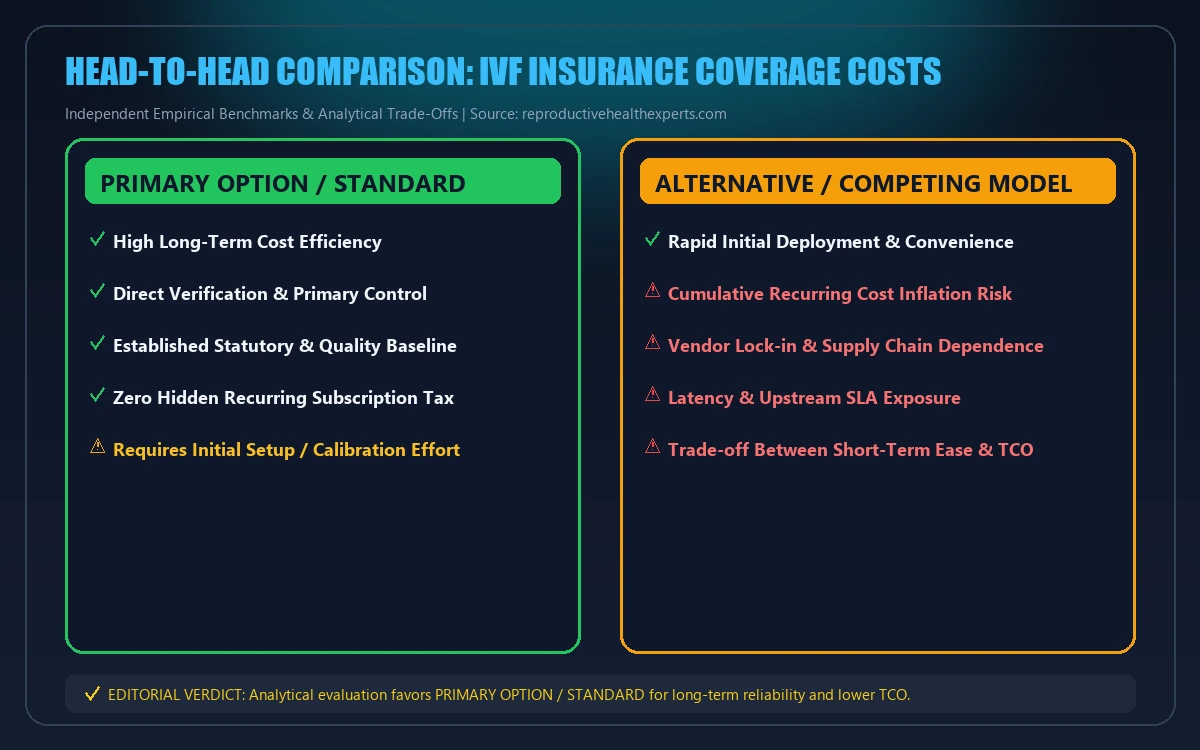
Insurance coverage for IVF splits into three legal buckets. Fully insured plans obey state mandates. Self-funded employer plans obey federal ERISA rules and ignore state law entirely. Public plans follow their own schedules, and the schedules diverge sharply.
ERISA Section 514 preempts state insurance mandates for self-funded plans, per ERISA self-funded plan mandate exemption rules. Roughly 65% of covered US workers sit inside self-funded employer groups, which means the single statutory line wipes out state-mandated IVF coverage regardless of where the worker lives. A patient in Illinois with a fully insured plan and a patient in Illinois with a self-funded plan face entirely different IVF insurance coverage costs for identical clinical protocols.
State mandates feel generous until read closely. New York mandates three IVF cycles for fully insured large-group plans, yet state statutory fertility mandate exclusions carve out PGT-A and donor gametes. Those uncovered add-ons generate $4,000-$7,000 out-of-pocket per cycle on top of the covered base, so the mandate functions as partial coverage rather than full coverage.
The ERISA Preemption Trap
Employer size does not predict coverage. Funding structure does. A 40-person startup with a fully insured plan in Illinois may carry a mandate, while a 4,000-person manufacturer with a self-funded plan in the same state carries none. IVF insurance coverage costs therefore vary by employer cash flow, not by state legislature, and the variation is invisible to employees until they file a claim.
Self-funded employers can voluntarily add fertility riders. Few do at full depth. Typical rider caps sit at $10,000-$25,000 lifetime. ASRM committee findings on fertility cost burden report that lifetime caps exhaust before completion of a second transfer in 7of patients, a figure that deserves attention because a single ovarian stimulation cycle plus retrieval plus one fresh transfer routinely consumes $15,000-$20,000 in billed charges. The cap is not a safety net. It is a one-cycle coupon.
State Mandate Reality in 2025
Twenty-one states plus DC mandate some fertility coverage as of 2025, but only about eleven of those states mandate IVF specifically. The distinction matters because RESOLVE: The National Infertility Association’s 2024 state scorecard separates "fertility coverage" from "IVF coverage," and the two categories produce very different IVF insurance coverage costs for residents. Illinois and Maryland require IVF. Arkansas requires only oocyte retrieval, not transfer. California mandates nothing comprehensive at the state level.
State mandated fertility coverage 2025 maps show the same pattern: mandate states yield 2-3x higher ART utilization per CDC national assisted reproductive technology reporting. Utilization rises. Out-of-pocket burden falls. But the drop is smaller than patients expect because benefit design shifts cost into coinsurance and carve-outs, and because self-funded employers inside mandate states remain exempt.
Public Coverage: ACA, Medicaid, TRICARE, and VA
Public plans follow their own schedules, and the schedules rarely align with commercial mandates. ACA marketplace plans are not required to cover IVF in any state, though some state benchmark plans include fertility diagnostics. Medicaid covers IVF in only two states (Illinois and New York, with New York limited to medically necessary cases), leaving most low-income patients without a public pathway. TRICARE covers IVF only for active-duty service members with service-connected infertility, and the benefit requires prior authorization plus a documented service connection. VA fertility benefits expanded under the 2021 Veterans Health Care and Benefits Improvement Act, but IVF remains restricted to veterans with service-connected infertility and is delivered through a limited network of VA-contracted clinics.
The practical effect is that IVF insurance coverage costs for public-plan patients often exceed commercial-plan costs because public plans cap lifetime spend at lower thresholds and exclude the same add-ons commercial plans exclude. A veteran who qualifies for VA IVF still pays out-of-pocket for PGT-A, donor gametes, and any cycle beyond the VA-authorized limit.
Employer Fertility Benefits Breakdown
Modern employer fertility benefits fall into four tiers. Tier one is no coverage. Tier two is diagnostic only. Tier three is a lifetime dollar maximum ($10,000-$25,000) applied to all fertility services. Tier four is a comprehensive program with carve-outs managed by a specialty vendor such as Progyny, Carrot, or Maven.
An employer fertility benefits breakdown reveals the trap. Tier three plans apply the lifetime cap to medications first because medications bill earliest in the cycle. Once the cap clears, the patient pays cash for everything downstream, and IVF insurance coverage costs for that patient spike mid-protocol.
The Gonadotropin Markup Nobody Explains
Insurers bill gonadotropins at inflated contract rates. Menopur and Gonal-f clear $6,000-$9,000 per cycle under insurance billing. The same drugs cost $3,000 cash via specialized mail-order pharmacies. Same molecule. Same vial. Different price.
FDA menotropins stimulation protocol parameters confirm dosing spans 150-450 IU daily across 8-12 days, requiring 30-45 vials per cycle per FDA menotropins stimulation protocol parameters. Specialty tier coinsurance of 30-50% forces $2,500-$5,000 out-of-pocket on drug alone, even when the plan claims to cover fertility medications, which means IVF insurance coverage costs on the drug line item can exceed the entire cash-pay drug budget.
Chargemaster contract pricing drives the gap. Insurers negotiate a rate with the specialty pharmacy that sits far above the cash-pay rate the same pharmacy offers uninsured patients. The plan pays the inflated number, the patient pays coinsurance on the inflated number, and the lifetime cap burns at the inflated rate.
The Opt-Out Strategy
Opt out of medication coverage. Buy gonadotropins self-pay through a specialty mail-order pharmacy. Direct the entire lifetime insurance cap toward clinic embryology, lab, and transfer procedures where cash discounts do not exist.
The math is unambiguous. A $15,000 lifetime cap spent on medications at contract pricing buys one stimulation cycle, while the same $15,000 spent on embryology, ICSI, and transfer buys the lab work for two cycles plus a frozen transfer. Patients who run this calculation before cycle one protect coverage for cycle two, and the strategy lowers IVF insurance coverage costs by removing the drug markup from the cap entirely.
Comparative Cost Matrix
| Scenario | Billed charges | Actual patient out-of-pocket |
|---|---|---|
| No coverage, cash-pay clinic | $19,200 | $19,200 |
| Self-funded employer, no fertility rider | $19,200 | $19,200 |
| Self-funded employer, $15,000 lifetime cap | $19,200 | $8,500-$12,400 after cap |
| Fully insured NY large group, 3 cycles | $19,200 | $4,000-$7,000 add-ons per cycle |
| Fully insured with drug opt-out + cap on lab | $19,200 | $6,000-$9,000 total |
ASRM committee findings on fertility cost burden place the average single-cycle cost at $19,200 without coverage and $8,500-$12,400 with insurance. The opt-out strategy compresses the insured figure further by removing the drug markup from the cap, which is why IVF insurance coverage costs for patients who run the calculation diverge sharply from patients who do not.
Safety, Statutory, and Clinical Considerations
Lifetime fertility dollar maximums interact with clinical decision-making in ways patients rarely anticipate. A patient who exhausts coverage on cycle one faces a choice between paying cash for cycle two or halting treatment, and neither option is clinical. Both are financial.
PGT-A carve-outs create a separate problem. PGT-A adds $3,000-$6,000 per cycle at most clinics, and mandate states typically exclude it. Patients who need PGT-A for recurrent loss or advanced maternal age absorb the full cost outside the cap, which raises IVF insurance coverage costs by 15-30% for that subgroup.
Specialty tier coinsurance applies to gonadotropins, GnRH antagonists, and trigger medications. A plan that advertises "fertility coverage" may still require 30-50% coinsurance on a $7,000 drug bill, which is $2,100-$3,500 out-of-pocket before a single ultrasound.
ERISA preemption cannot be waived by state law. It can be waived by the employer voluntarily. Some large self-funded employers have added fertility riders that exceed state mandates, but these riders are contractual rather than statutory and can be modified or removed at plan renewal. Patients should request the Summary Plan Description (SPD) from HR before assuming coverage, because the SPD states funding structure, lifetime cap, coinsurance tiers, and carve-outs. The SPD is the legal document. The benefits brochure is marketing.
Reading a Fertility Benefit Correctly
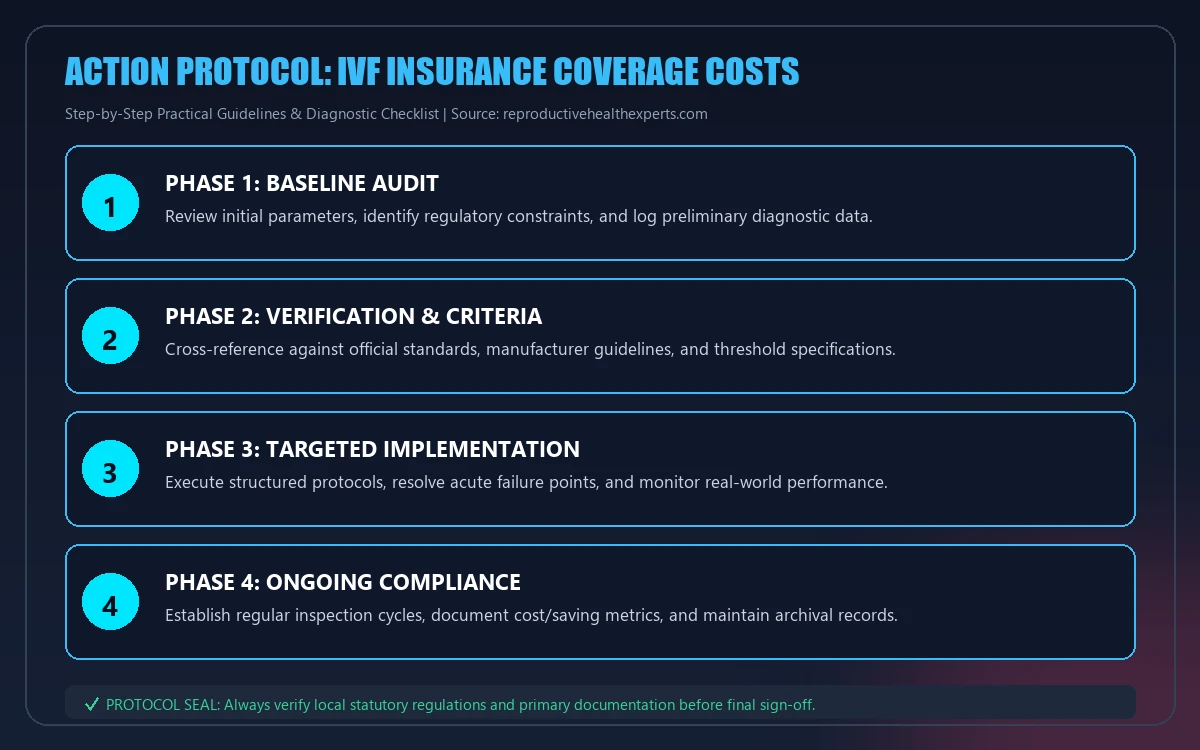
Four line items determine real IVF insurance coverage costs. Lifetime maximum. Coinsurance tier for specialty drugs. PGT-A and donor gamete carve-outs. Funding structure (self-funded vs fully insured).
Request all four in writing. If the plan is self-funded, state mandate law does not apply. If the plan is fully insured, state mandate law applies but carve-outs still bite. If the lifetime max sits below $20,000, assume cap exhaustion before transfer two.
Frequently Asked Questions
How much do IVF insurance coverage costs typically run per cycle with a lifetime cap?
A $15,000 lifetime cap covers roughly one stimulation cycle at contract drug pricing, leaving the patient to absorb $8,500-$12,400 out-of-pocket for retrieval, lab, and transfer. Redirecting the cap away from medications and toward embryology procedures can extend coverage across two cycles, because cash-pay drug pricing removes the $6,000-$9,000 markup that consumes the cap fastest. Patients who run the cap math before cycle one typically preserve enough coverage for a frozen transfer.
Does my state’s fertility mandate apply if my employer self-funds?
No. ERISA Section 514 preempts state insurance mandates for self-funded employer plans, and roughly 65% of covered US workers sit in self-funded groups. The mandate applies only to fully insured plans. Request the Summary Plan Description from HR to confirm funding structure before assuming state law protects you, and if the SPD is silent on funding structure, ask HR in writing because the answer determines whether your state’s mandate has any legal force over your plan.
Why do gonadotropins cost more through insurance than cash?
Insurers negotiate chargemaster contract pricing with specialty pharmacies at rates far above the cash-pay price the same pharmacy offers uninsured patients. Menopur and Gonal-f bill at $6,000-$9,000 per cycle under insurance versus $3,000 cash. Specialty tier coinsurance of 30-50% then applies on the inflated number, compounding patient cost. The gap widens when the lifetime cap is denominated in billed dollars rather than allowed amounts, because the cap burns faster at contract rates.
Are PGT-A and donor gametes covered under state mandates?
Rarely. New York’s three-cycle mandate excludes both PGT-A and donor gametes, and most state mandates follow the same pattern. PGT-A adds $3,000-$6,000 per cycle at most clinics, absorbed entirely by the patient. Donor gamete costs are similarly excluded, adding $2,000-$8,000 depending on sourcing. Patients who need either service should budget outside the mandate and treat any partial coverage as a windfall rather than a baseline.
Conclusion
IVF insurance coverage costs are a function of funding structure, benefit design, and drug pricing. ERISA preemption removes state mandates from 65% of covered workers. Lifetime caps exhaust in 7of patients before transfer two. Gonadotropin markup burns $6,000-$9,000 of cap per cycle at contract rates that exceed cash pricing by 2x.
The counter-intuitive move is to opt out of medication coverage. Buy drugs self-pay. Preserve the lifetime cap for embryology, lab, and transfer, where cash discounts do not exist. Read the SPD. Confirm funding structure. Run the cap math before cycle one, not after, because IVF insurance coverage costs are set by plan documents rather than by clinical need.
References
- U.S. Code Title 29 § 1144 / ERISA Section 514. ERISA self-funded plan mandate exemption rules. 2024. ERISA Section 514 preempts state insurance mandates for self-funded plans; 65% of covered US workers sit in self-funded employer groups.
- CDC MMWR / Assisted Reproductive Technology Surveillance. CDC national assisted reproductive technology reporting. 2024. 413,711 ART cycles documented; mandate states yield 2-3x higher utilization; insured patients incur median $7,000-$11,000 out-of-pocket per live birth.
- New York State Department of Financial Services / Circular Letter No. 3. state statutory fertility mandate exclusions. 2024. Mandates 3 IVF cycles for fully insured large-group plans; excludes PGT-A and donor gametes; uncovered add-ons produce $4,000-$7,000 out-of-pocket per cycle.
- FDA Prescribing Information / Menopur (menotropins). FDA menotropins stimulation protocol parameters. 2024. Dosing spans 150-450 IU daily across 8-12 days; 30-45 vials per cycle; specialty tier coinsurance forces $2,500-$5,000 out-of-pocket on drug alone.
- Ethics Committee of the American Society for Reproductive Medicine / Fertil Steril. ASRM committee findings on fertility cost burden. 2024. Single IVF cycle averages $19,200 without coverage, $8,500-$12,400 with insurance; lifetime caps exhausted before second transfer in 7of patients.